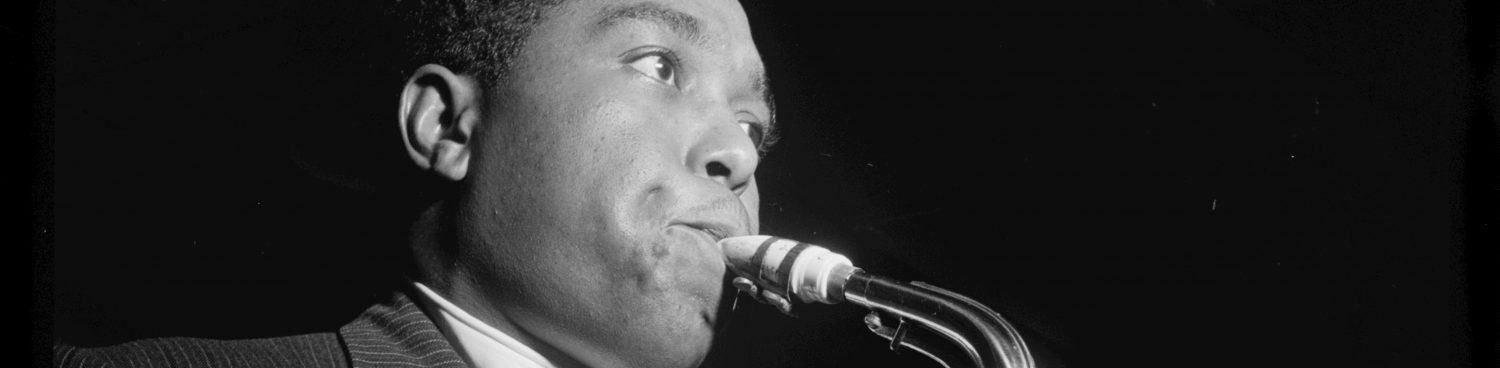
Kansas City trumpeter Clarence Davis recorded on an amateur disc-cutter alto saxophonist Charlie Parker improvising a medley of two songs. Although the performance has been referred to under a variety of names, Davis labeled his disc simply “Honey & Body.” –Carl Woideck, “Charlie Parker, His Music and Life”
If you’re prepared to follow Bird through a wormhole, you can try to establish the exact recording date for “Honey & Body,” presumed to be his first recording. If you want to save yourself the trip, you can settle for an inexact date, but even that is elusive.
If, however, you can make peace with uncertainty, you may be satisfied with this convoluted answer: “Honey & Body” was recorded no earlier than December, 1939, but more likely in the early months of 1940, or at least sometime before the Wichita Transcriptions, recorded at the end of November, although a recording date in 1941 can’t be ruled out.
The collector in possession of the “Honey & Body” disc gave the recording date as 1937. This isn’t impossible on its face, since Bird was still living in Kansas City at the time and knew Clarence Davis, but it’s impossible nonetheless, due to evidence provided by the “Body And Soul” portion of the recording itself.
Here’s the complete “Honey & Body.” Bird segues from “Honeysuckle Rose” to “Body And Soul” at 2:11
The posited 1937 recording date goes out the window at 2:55, when Bird quotes Roy Eldridge while leading into the “Body And Soul” bridge:
Here’s an excerpt from Eldridge’s solo on the October 10, 1938 Commodore recording of “Body And Soul,” released under Chu Berry’s name:
Bird uses the same quote at 0:40 in the November 30, 1940 recording of “Body And Soul,” part of the Wichita Transcriptions:
Bird may be relying on this quote to make a difficult transition to the key of D major, but the same might be said of Eldridge, who also uses it this version from the Savory Collection:
So “Honey And Body” can’t have been recorded any earlier than October, 1938.
But that date is immediately defenestrated in the following bar, when Bird quotes Jimmy Van Heusen’s “I Thought About You,” copyrighted in 1939. Bird wouldn’t have heard any popular big band arrangements of the song, such as Benny Goodman’s, until October, 1939.
Speaking of October, 1939, there’s circumstantial evidence to be found in the Coleman Hawkins’ version of “Body And Soul,” recorded on October 11th. Bird quotes it in the November 30, 1940 solo noted above.
Here’s Hawkins:
The fact that Bird didn’t use this quote in “Honey & Body” might be viewed as evidence that it predates the Wichita Transcriptions. I wouldn’t be persuaded by that argument alone, but Bird’s “Honeysuckle Rose” solo (December 2, 1940) is an argument unto itself. Bird’s supernatural poise at an unforgiving tempo surpasses “Honey & Body” on every level.
Put that in your pipe and smoke it.
 Charlie Parker 2020 - A Bird Centennial Blog