Was Young Bird influenced by Buster Smith? Did Young Bird Abuse Alcohol? Part One of Four
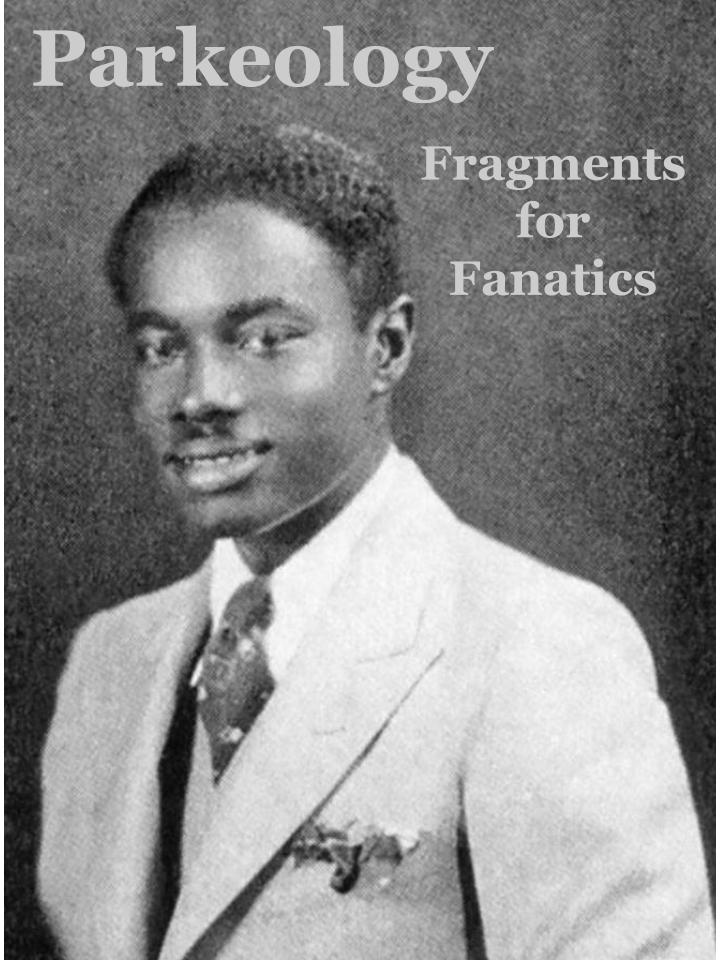
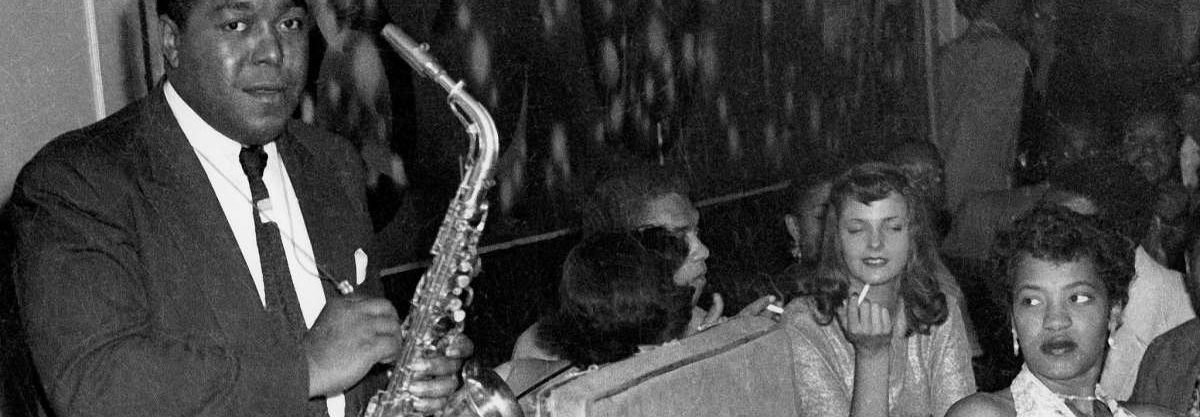
[Charlie] just seemed to be always studying music. Lester Young was that way. Sitting down at a table and partying and going on? No, you wouldn’t see them doing that. They didn’t think about anything but playing their horn. He hadn’t been smoking nothing, didn’t drink nothing… –Buster Smith
Buster’s words are striking because they fly in the face of received wisdom about Bird’s addictions and bad behavior. Jazz writers, themselves besotted with the notion of Bird’s “demons,” simply assume that he took up alcohol and heroin at the same time, twin acts of self-destruction. It’s indisputable that Bird drank heavily at times, beginning in 1946, but there’s no solid evidence that he abused alcohol in his teens and early twenties, a period of unparalleled artistic development.
What Buster’s words illustrate, and what jazz writers past and present lose sight of, is the fact that music was the focus of Bird’s entire being. Everything was about music.
Everything except alcohol.
***************************************************
If anyone knows anything about Henry “Buster” Smith, also known as “Prof,” it’s that he was Bird’s mentor in Kansas City when Bird was a teenager. It’s often said that his influence on Bird was second only to Lester Young’s. Given how close they were, that’s a reasonable assumption, but proving it is another matter.
The most common argument centers on Buster’s stripped down Kansas City tone. He doesn’t sound remotely like Hodges, Carter, etc., and it’s hard to name another altoist of that era who sounds more like Bird than Buster does. But he doesn’t sound that much like Bird, and opinions about tone quality and stylistic resemblance aren’t evidence.
There’s no shortage of evidence to consider, but Buster’s relationship with Bird, and his larger role in jazz history, is a sprawling topic that’s a bit of a hike. So, as an evidentiary down payment, I present this uncanny match, both men soloing on “Moten Swing” three weeks apart, Buster in New York City on November 11, 1940, and Bird in Wichita, Kansas on December 2, 1940. Buster first, then Bird:
It’s only three notes, of course, but both occur in exactly the same place in the form (pickups into bar 5) and the phrasing is identical. We will revisit this later, in a broader context.
Before we hit the road, though, here’s some food for thought: It’s possible that these notes weren’t played by Buster Smith at all. There was another alto player on the date named Willard Brown who may have taken at least one, if not two, of the three alto solos on “Moten Swing.”
***************************************************
There’s a fine line between bad luck and bad timing. Either way, Buster Smith made a fateful decision that cost him the recognition he deserved: He left the Count Basie Orchestra shortly before John Hammond whisked them out of Kansas City, first to Chicago and then to New York City, where fame, if not exactly fortune, awaited them.
But I will let Buster tell as much of his own story as possible, primarily through excerpts from a three-part interview with Don Gazzaway, published in 1960 in The Jazz Review. Here’s Buster:
After Bennie [Moten] died, Basie pulled out and went down to the Reno Club [in Kansas City]. He and Bus Moten couldn’t get along. Bus took the band over after Bennie’s death. I told you how hot-headed he was. I stayed on with Bus till all the boys started cutting out, so I saw they were going to leave me by myself with Bus, so I took off too and went down to the Reno and carried my repertory with me. Basie told me, ‘Prof, I’ll tell you what I’ll do. We’ll organize the band and have a partnership. It’ll be your and my band and we’ll call it the Buster Smith and Count Basie Band of Rhythm.’ I said O.K., fine.
We broadcasted there [the Reno] at night, about 11:15 to midnight I think it was. That was when Benny Goodman heard us, on one of our broadcasts. Benny heard us and sent Basie a telegram and said he was going to send a representative down there. Well, John Hammond came down as Benny’s representative and got the band some uniforms and booked them into the Grand Terrace in Chicago. I had already left and joined Claude Hopkins. I was there when the telegram came, but when John Hammond came down I had just left. We’d heard so much about how somebody was going to come and get the band and make it big. I just didn’t think anything about it—figured it was just more talk —so I left.
Buster’s decision to leave Basie is directly responsible for his obscurity. It’s impossible to calculate the number of Buster Smith solos we would possess had he stuck with Basie. Instead, we have no Buster Smith solos from the period between the November 10, 1929 Blue Devils date and the June 30, 1939 Pete Johnson date. This was the decade when Buster was performing with, and arranging for, many of the most important territory bands, and working shoulder to shoulder with many of the most important soloists to emerge from Kansas City and the Southwest, Lester Young included.
***************************************************
We know Bird abused alcohol in 1946, while suffering from acute heroin withdrawal in LA. After his release from Camarillo (February 1947), he abused alcohol to prevent readdiction to heroin, a disastrous strategy. I’m not defending narcotics, but nothing tops alcohol for sheer destruction.
Bird stayed clean during the Hi-De-Ho gig, led by Howard McGhee (March 1947), but the Benedetti recordings capture him at every stage of intoxication. How long he stayed clean after his return to New York City (April 1947) is up for debate, but both Dizzy and McGhee detected signs of relapse within a matter of weeks.
Buster states above that he never saw Bird drinking or smoking marijuana, and he reiterates this below. His comments come from a 1981 interview with Chris Goddard, conducted by the Institute of Jazz Studies at Rutgers University. Buster was in his late seventies then, so Bird had been dead for twenty-five years. To me, he sounds more nostalgic than combative, and I find his defense of Bird touching.
Goddard: Do you have any idea why it was that Bird became such a wildly unstable character? Why was it necessary for him to get off on drugs and all that kind of thing?
Smith: I don’t know anything about it, because he didn’t smoke, didn’t drink, didn’t do anything when he was around me.
Goddard: But is there anything to suggest in Charlie Parker’s sort of youth, when you first met him… Did he seem to be an unstable sort of guy?
Smith: No. He was a normal man, normal boy. Good boy.
Goddard: Because his behavior really became very peculiar later on.
Smith: Yeah, he was a good boy. He was like that with me down in Kansas City. A good boy, good to get along with, agreeable with anything you wanted to do–it was all right with him.
Buster goes on to say that he thought Bird may have been hiding his heroin use out of respect, and he is almost certainly right. Bird consistently claimed he began using heroin in 1935, at age fifteen. There’s reason to doubt he was quite that young, but sixteen is probable, and he was surely using by the time he was working with Buster, in 1937.
Buster reiterates this point in a Down Beat interview published in the July 11, 1956 issue, saying, “If he was using narcotics in Kansas City, I didn’t know about it. Oh, I heard rumors, but if he was he hid it from me.”
These words suggest to me that Bird’s heroin use was under control during this period. It’s likely he was using marijuana and Benzedrine, as well, also under control and hidden from Buster.
Tootie Clarkin, the Kansas City nightclub owner for whom Bird worked throughout his life, had a front row seat for Bird’s teenage years.
When I first knew Charlie, he was getting high on nutmeg. From nutmeg Bird went to Benzedrine inhalers. He’d break them open and soak them in wine. Then he smoked tea and finally got hooked on heroin.
Alcohol abuse is conspicuously absent from this litany of escalating habits. I must confess, however, that in the very next sentence Clarkin says, “He was the only man I knew who could drink with heroin.” As flop sweat rolls off my brow, I will attempt to explain away this inconvenient piece of evidence. Bird came home to Kansas City to visit periodically, and also worked at Tootie’s Mayfair twice in later years, in July 1951 and July 1952. I contend that Clarkin observed Bird combining alcohol with heroin during these return visits, not during Bird’s teenage years.
I can explain away the wine with more bravado. Bird needed to soak the wick he extracted from the Benzedrine inhaler in some sort of liquid, to leach out the active ingredient, preferably in a liquid that helped mask the medicinal taste. Wine conveniently fit the bill, its alcohol content likely incidental.
The classic Rubberlegs Williams anecdote documents Bird’s use of coffee for this same purpose. Williams, a teetotaler, made his name as a dancer, and he was also a serviceable blues singer. But, after accidentally drinking Bird’s Benzedrine-laced coffee, he was transformed into a blues-shouting inferno. As Bird put it, “Ants don’t do nothing the way Rubberlegs! Rubberlegs really got busy, you know what I mean?”
Here’s an excerpt from “That’s the Blues” (January 4, 1945, Continental, full track below). Rubberlegs yells for the first four bars and then Bird comes in, rising above the mayhem to contribute a sincere and serene eight bars, the eye of the hurricane:
This solo raises interesting questions: Did Bird have more Benzedrine with him, to drop into another cup of coffee? Or did he have to go without during this session? If so, might that have contributed to his understated approach, which seems to soothe Rubberlegs, however briefly?
I don’t know about that, but I’m sure about this: Bird wasn’t drunk.
***************************************************
When we left off, Buster had just quit the Basie band:
Lips [Page] left too, before I did. We hadn’t been gone long before I heard Basie broadcasting from the Grand Terrace in Chicago, and I was pretty surprised–and a little sorry–I hadn’t stayed with him. Basie wanted me to come back but some of the boys in the band said, “Aw, don’t take Buster back, he went off and left us.” So Basie said, “Bus, some of the boys are a little hot, so just stick around a while till they cool off and then come on back.” But I never did go back as a member of the band.
So I went back to Kansas City and organized my own band in 1937. We had twelve pieces. I played alto and of course Charlie Parker played the other alto. Charlie had been in Kansas City for a long time. I’d seen him running around in 1932 or 1933 when he was just a kid. Charlie would come in where we were playing and hang around the stand, with his alto under his arm. He had his horn in a paper sack—always carried it in that paper sack.
Buster apparently had more than his share of bad luck, before and after quitting Basie, but we have benefited in one way from his misfortunes. Had Buster gone with Basie, Bird would have had no mentor, and who knows what might have become of him then?
But just because Buster was his mentor, it doesn’t automatically follow that Bird was influenced by him musically. And we face a built-in impediment: Buster Smith is so under-recorded that, in a sense, we don’t even know what he sounds like. We don’t have a body of work, we just have snapshots, and the snapshot from 1929 and the snapshot from 1939 bookend a gaping void. But these bookends are a good place to start, or, under the present circumstances, end.
Walter Page and His Blue Devils recorded two tracks for Vocalion on November 10, 1929. It’s the only recording made by this legendary territory band. The clarinet solo on “Blue Devil Blues” may or may not have been played by Buster, so it’s better to focus on “Squabblin” instead (full track below). Lewis Porter credits Buster with both the alto solo and the clarinet solo on this track and that’s good enough for me. So here’s Buster in 1929, first on alto, then on clarinet:
The Pete Johnson’s Boogie Woogie Boys session (June 30, 1939, Vocalion) has the virtue of absolute certainty. The three alto solos here are indisputably played by Buster (the only saxophonist on the date) and function as a body of work in miniature. As it happens, all three solos are in C major. Here they are in a row, “Baby Look at You,” “Jump for Joy,” and “Cherry Red,” in that order (full tracks below):
While vastly better than nothing, these solos only offer a glimpse of Buster’s style. We don’t know what he sounded like on other days, with other bands, on other tunes, in other moods, or even in other keys. But we do know what Bird sounds like, in every particular, through recordings that now number in the thousands. So the task at hand is to measure our glimpses of Buster against our full knowledge of Bird.
In other words, ask not where Bird sounds like Buster. Ask where Buster sounds like Bird.
***************************************************
Here’s “That’s the Blues” (January 4, 1945, Continental) Clyde Hart’s All Stars: Henry “Rubberlegs” Williams shouting, Dizzy Gillespie trumpet, Charlie Parker alto saxophone, Don Byas tenor saxophone, Trummy Young trombone, Clyde Hart piano, Mike Bryan guitar, Al Hall bass, Specs Powell drums
Here’s “Squabblin’” (November 10, 1929, Vocalion) Walter Page and His Blue Devils: Hot Lips Page, James Simpson, James LuGrand, trumpets; Druie Bess, trombone; Buster Smith, Theodore Manning, Reuben Roddy, saxes; Charlie Washington, piano; Reuben Lynch, guitar; Walter Page, baritone-sax, tuba, bass; Alvin Burroughs, drums. Jimmy Rushing, vocal
Here are the three tunes Buster recorded with Pete Johnson (June 30, 1939, Vocalion) “Baby Look at You,” “Jump for Joy,” and “Cherry Red,” in that order. Pete Johnson’s Boogie Woogie Boys: Hot Lips Page, trumpet; Buster Smith, alto; Pete Johnson, piano; Lawrence Lucie, guitar; Abe Bolar, bass; Eddie Dougherty, drums. Joe Turner, vocals.

